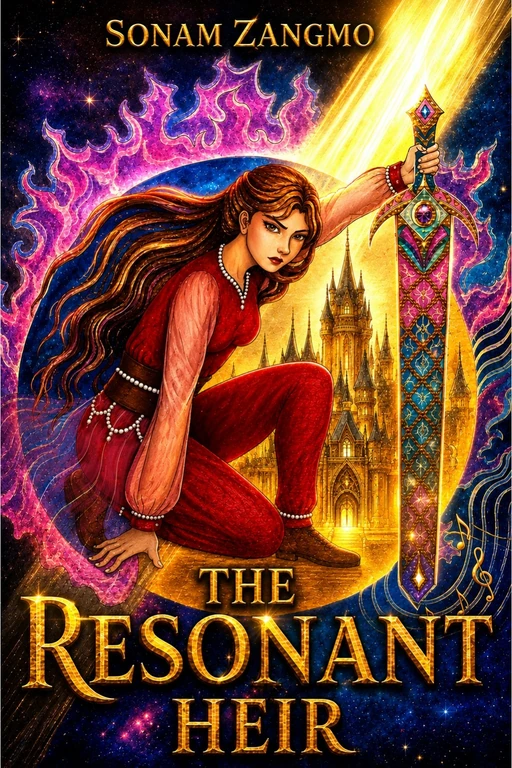
 Explore The Resonant Heir
Royal Fantasy · Hidden Magic · Female Lead · Coming-of-Age · Royal Intrigue · Fantasy Adventure
Explore The Resonant Heir
Royal Fantasy · Hidden Magic · Female Lead · Coming-of-Age · Royal Intrigue · Fantasy Adventure
Fiction Knowledge · 02
YA Fantasy Books
Have you ever been so absorbed in a fantasy book that you lost track of time? Sometimes the real discovery is not the world on the page, but something in yourself you did not know how to name yet.
The appeal
What makes YA fantasy books so hard to put down?
YA fantasy books offer two kinds of discovery at once: exploring fantasy worlds and watching young protagonists discover themselves. Magic, adventure, and danger create external stakes, while identity, belonging, friendship, romance, and coming of age make those stakes deeply personal.
That combination gives Young Adult fantasy its emotional immediacy. A hidden power can become a struggle with identity; a journey can test independence; friendship and love can challenge loyalty; and gaining power can bring responsibility, difficult choices, and character growth.
The appeal is not limited to fast-paced fantasy or romantic adventures. Young Adult fantasy can be dark, political, humorous, intimate, or epic—but at its most compelling, discovering an extraordinary world happens alongside self-discovery. The reader keeps turning pages to learn not only what happens next, but who the character will become.
Reading & imagination
What does your favorite fantasy genre say about you?
The fantasy worlds you return to may reveal something about the experiences your imagination wants to explore. Research has linked attraction to imaginary worlds with curiosity, exploration, and openness to experience—but different kinds of fantasy may draw out very different parts of that curiosity.
Dark Fantasy — The Shadow Seeker
You may be drawn to what lies beneath the surface: fear, moral ambiguity, forbidden ideas, damaged characters, and the darker possibilities of human nature. Perhaps mystery does not repel you—it makes you want to look deeper. Psychology offers a useful concept here: morbid curiosity, our willingness to approach and understand disturbing or threatening experiences rather than simply turn away from them. Fiction lets us explore that shadow side of human nature from a safe distance.
Epic & High Fantasy — The Explorer
Vast worlds, ancient histories, distant kingdoms, unfamiliar cultures, and journeys beyond the known may appeal to the part of you that wants to discover what lies beyond familiar boundaries. The attraction may be less about escaping reality than expanding it—a pattern consistent with research connecting fascination with imaginary worlds to exploratory preferences and openness to experience.
Romantic Fantasy — The Heart Seeker
If romantic fantasy keeps calling you back, emotional discovery may matter as much as magic. Stories built around attraction, trust, vulnerability, longing, and intimacy turn relationships into adventures of their own. What fascinates you may not simply be whether two characters fall in love, but what they must reveal, risk, or change before they can truly reach one another.
Royal & Political Fantasy — The Power Reader
If you prefer royal fantasy or political fantasy, you may be fascinated by the forces hidden beneath beautiful kingdoms and glittering crowns: power, loyalty, ambition, hierarchy, duty, betrayal, and control. These stories ask who gets to rule, who chooses to obey, what power does to people, and what someone is willing to sacrifice to gain or keep it. Perhaps the crown attracts you because you want to know what lies behind it.
Cozy Fantasy — The Home Seeker
If cozy fantasy feels most like home, your imagination may be searching for comfort, belonging, community, healing, and safety. Not every fantasy needs to ask how the world can be saved. Sometimes the more meaningful question is whether, in a strange and magical world, we can still find somewhere—and someone—to belong to.
Hidden Magic — The Potential Seeker
If you cannot resist stories about hidden magic, hidden powers, or characters discovering abilities they never knew they possessed, perhaps what draws you is potential. Beneath the magic lies a deeply human possibility: that there may still be something within us we have not discovered, understood, or learned how to use.
Your favorite fantasy genre cannot define your personality, and reading preferences are not a psychological test. But the imaginary worlds we choose again and again may offer clues to what our minds enjoy exploring—mystery, adventure, intimacy, power, belonging, transformation, or self-discovery.
Sometimes what draws us into an imaginary world is exactly what we are trying to understand in the real one.
A useful comparison
YA fantasy vs Adult fantasy
The difference between YA fantasy and Adult fantasy is not simply romance, violence, dark themes, political intrigue, or complex worldbuilding. Both can contain mature subjects, morally complex characters, dangerous worlds, and high-stakes conflicts.
The distinction lies more in target audience, protagonist age, and narrative perspective. Young Adult fantasy commonly follows teenage protagonists experiencing questions of identity, relationships, independence, and growing agency, while Adult fantasy is written and marketed primarily for adult readers and is not centered on an adolescent stage of life.
The boundary, however, is flexible. A teen protagonist does not automatically make a book Young Adult, just as darkness or complexity does not make it adult. Some stories sit comfortably in one category while reaching far beyond its expected readership—and that is where crossover fantasy becomes especially interesting.
The definition
So, what exactly is YA fantasy?
YA fantasy, or Young Adult fantasy, combines fantasy fiction with the experiences and perspectives of adolescence. It often follows teenage protagonists through magic, supernatural forces, invented worlds, or extraordinary powers while exploring identity, belonging, friendship, love, independence, and responsibility.
The category is broad: Young Adult fantasy can include high fantasy, epic fantasy, urban fantasy, contemporary fantasy, romantic fantasy, dark fantasy, dystopian fantasy, or supernatural fantasy, with stories ranging from hidden powers and magical worlds to royal courts, political intrigue, monsters, and kingdoms at war.
What makes a fantasy story Young Adult is therefore not one trope, setting, or level of complexity, but its readership and Young Adult perspective. YA fantasy is less a restriction on what fantasy can contain than a lens through which the extraordinary is experienced.